See. Decide. Build. In that order.
You've read what we treat. This page is the part agencies keep vague: what actually happens when you hand a stranger $2,500 and access to your numbers. So here it is with a clock on it. A free call to check we're aligned, two working sessions with your leadership in the room, and a written diagnosis you keep, walked through with you until it's truly understood. Nothing gets built until we both see the same truth.
Whatever you're calling the problem, it's probably misnamed.
Almost every owner who comes to us arrives sure they need more: more leads, more spend, more tactics. The data almost always points somewhere else. The lead problem you name on the first call usually turns out to be a measurement problem underneath, and treating the wrong name is how a year of budget disappears. So before anything gets recommended, we look until the numbers name the real constraint, whatever the gut says.
The real problem is usually two to four problems wearing one mask. Our whole job is taking the mask off.
What happens after you pay, step by step, with a clock on it.
You've seen a hundred process pages: five steps, stock icons, a diagram shaped like a funnel, zero information. Fair. Most process pages are vague because the process is a pitch in stages, and specifics would give that away. Ours can afford a clock and a roster, because the diagnosis isn't the road to the work. For the owner who already knows their business, the diagnosis is the work.
A conversation, free.
It works the way a specialist's office does when it takes self-referrals: you call, you describe the situation in general terms, and together we decide whether the visit makes sense. On that call we're checking three things: you understand what this is for, your expectations are realistic, and your questions get answered. If any of those fail, you keep your money and we part as friends.
You pay $2,500. The calendar opens.
The moment the invoice clears, you get access to our calendar and book both working sessions at your own pace. You also open read access to the numbers: your analytics, your CRM, your ad accounts, your email performance. We need to see what happens from the click, and from the organic visit, all the way down to the moment a sale lands.
Two hours, your leadership in the room.
Not just you: whoever runs sales, whoever runs fulfillment, and your marketing team if you have one. The people who live in the numbers see things the owner can't, and some of the most valuable findings come from someone finally saying the thing they didn't know how to put in a report. We'll ask what you're measuring, what better looks like with a number on it, and what you've already tried, because what you've already tried, and what each attempt did, is the first evidence we read.
You're invited to challenge everything. There will be a reason behind each thing we raise.We go inside the numbers.
This part runs on our time alone: we trace the data you opened, test what the dashboards claim against what the bank account says, and read your competitors and the category's current playbook so the picture has context. If something we find contradicts what you told us, we don't build on it quietly. We bring it back to you first.
About three hours, straight-line focus.
The second session runs the trail to its end: the journey your buyer actually takes, where it breaks, and what the data says about why. No detours into exercises that belong to bigger engagements. By the end of this session we've built the findings with you, in the room, which matters for what comes next.
The written diagnosis, walked through live.
About a week after the final session, the document lands: what we found, our hypotheses at each point, the reasoning that connects them, and what we'd do about it, in order. It's the same document our own briefs would start from. Then we get on a third call, about ninety minutes, and walk it together, because until you truly understand a diagnosis, you can't decide anything with it. Nothing in it should catch you off guard. You were in the room while it was built.
You decide what happens next. Really.
You're deciding whether you align on the runway we've projected, what you'd modify, and which questions remain. Then you pick a path, and all four of them are honest ones. The findings are yours: run them with us, with your own team, or with nobody.
Inside the room What the sessions are actually like, from people who sat in them. The rules of the conversation, the questions that get asked, and why the founder speaks last.
The sessions run like a working meeting. Nobody presents at anybody. The rules get set out loud at the start: speak up the moment something doesn't sit right, don't wait for your turn, and challenge everything we raise, because there will be a reason behind it. The challenge runs both ways. When we push on an answer, read it as "tell me more about that."
The questions are simpler than you'd expect, and harder to answer than you'd think. Where are you now? How are you measuring it? What does better look like, with a number on it? Almost nobody joins the first session with those numbers figured out, and that's normal; when a number doesn't exist yet, establishing it becomes part of the prescription instead of a blocker. Then we walk the journey your buyer takes with one repeated question, what happens next, and mark an asterisk on every step where the honest answer is "that's not happening."
One rule surprises people: the owner speaks last. Your team answers first, because watching where their answers align with your vision, and where they quietly don't, is some of the best diagnostic data in the room. The findings that matter most are often the ones someone was too close to see, or too polite to say.
Three businesses. Three things they couldn't see.
Different industries, the same diagnostic process, shown here from the fuller engagements we've run it in for years. In each one the room surfaced a constraint the owner had been standing too close to see. Names removed on purpose. The realization is the point.
“We need better ads to get in front of more practices.”
Their single biggest advantage, being the direct maker, was invisible at the moment a practice chose. Buyers traded it away for one-call convenience, because no one had ever told them what that convenience cost. The tell came from their own sales side, minutes before the session ended.
“You’ve given me a perspective on who we are that wasn’t clear to me. We aren’t selling a product at a price. We’re selling peace of mind.”
“We’re just bad at marketing.”
Their weakest ad was pulling four times the industry click-through. The market was underserved, not their skill. And they were marketing the tool when the real product was giving owners their time back.
“That doesn’t prove the ad is good. It proves we’re the best-kept secret in a category nobody knows to search for.”
“Our main channel is tapped out and the leads are bad.”
They were pitching the 99% who weren’t ready to buy, and their free-trial offer was quietly selecting for the worst-fit customers. There was no step between a stranger and a sales call.
“This is exactly what we’ve been missing. There’s zero self-selection. This is why we’re bleeding.”
Same process, every market. Dozens more real diagnoses live in the Diagnosis Library. The one this page can't show you is yours.
The discipline How we set the ceiling before anyone spends: target, threshold, stop-loss. Every move is a hypothesis with a number attached, so you decide with your eyes open.
We don't spend on hunches, and we don't ask you to. Before a dollar moves on any recommendation, it gets written as a hypothesis with three numbers agreed first. Three numbers are how you decide with your eyes open, and how the ceiling gets set before the spend.
We believe this one move will move this specific number, because this is what the data already shows.
What success looks like, in a number we set together before we start. The scoreboard for the whole test.
The early signal that says we're on track, before the full result lands, so nobody is flying blind.
The kill-number. The point we stop and rethink instead of throwing good money after bad, agreed before you spend a dollar.
What if you get my business wrong? What if you find nothing?
The first fear has a structural answer. We never state a finding we can't substantiate with your data, and we'd question the competence of anyone who prescribes changes on day one without doing that homework. The findings also aren't ours alone: your team helped build them, in the room, session by session. So the document lands as "here's where we see the greatest potential, based on what we had access to," with the reasoning attached, and if your read of your market genuinely differs, that difference is usually a gap in perspective on one side or the other. We sit with it until the data settles which.
The second fear undersells what finding nothing means. If your business turns out to be in decent shape, you now hold rare validation, and you should know that owners don't reach out when nothing is wrong. Feeling stuck or hungry for more almost always means there's a constraint, and the data generally shows us where it lives. What interests us just as much is your relationship to it: if you see the constraint and you're at peace with it, the conversation turns to what's next for you, and we're happy to help sharpen that direction until it's clear enough to act on. And if nothing we find is worth more than the diagnosis costs, we say exactly that, out loud, on the call.
The first move is a Second Opinion.
A conversation is free. Opening your business and telling you the truth is a paid, standalone step, and it carries no agenda to sell you the build.
The Second Opinion
A pointed, senior diagnosis of your real numbers. We find where the greatest potential hides, and put it in writing.
Same logic as that specialist's office: diagnose first, prescribe only what the findings support. Two working sessions with your leadership in the room, our team inside your numbers between them, then the written diagnosis about a week later, walked through on a call of its own. Where a deeper gap shows up, say the picture of who your buyer really is has never been built, the fix is prescribed as its own piece of work with its own price, and you decide if and when. Nothing is bundled in quietly.
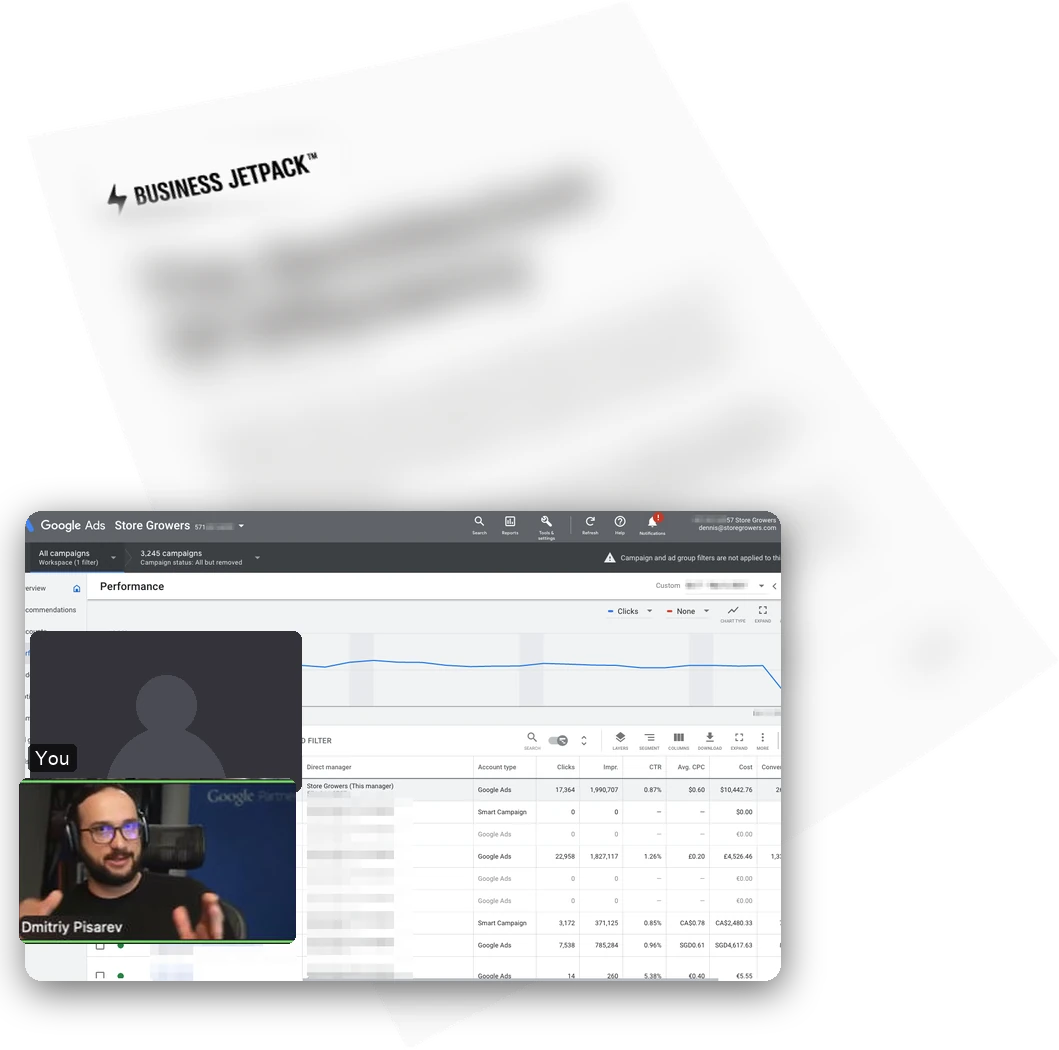
- The written diagnosis: findings, hypotheses, reasoning, and what we'd do, in order. If you hired us, our own briefs would start from this exact document.
- A live walkthrough of every finding, until you truly understand every one of them.
- The findings are yours either way: act on them with us, with your own team, or with nobody. One distribution company has taken theirs and run the entire build with their own team. We count that as a win.
Four honest exits leave the walkthrough call. We name all four, every time.
At the end of the walkthrough, both of us decide whether working together makes sense, and no is allowed in both directions. If the prescription is a treatment we run, it has its own page, its own terms, and its own price: the fractional CMO seat, conversion work, paid traffic, a funnel build, or a direction question, which resolves down four honest lanes mapped on that page. Whatever the prescription says, your options are the same four:
The team that diagnosed it builds it, on the treatment page's own terms. The findings don't expire on a sales clock; when the timing is real, we pick it up.
The document is written to be run without us, and it has been.
Give them the findings and let them execute. We'd rather you do that than sit stuck.
A real option, and we say so every time. Put it in a drawer and forget it. When the hurt starts hurting more, the drawer will still be there.
What owners want answered before paying us to look.
Agencies audit my business for free. Why would I pay $2,500?
A free audit answers to the sale it hopes to close, which is why its findings so reliably match whatever that agency sells. This one is decoupled from the sale from the first minute: you're paying for an opinion and a perspective, and the document is yours whether or not we ever work together. There's a second thing the fee buys that's harder to see. The way somebody approaches your business, the questions they ask, where they look, how the analysis is structured, tells you exactly how competent the team behind it is. Guess wrong about that and you find out a year of retainer later. The fee is how you check before you commit.
What makes this different from the audits I've been handed before?
Most audit reports we see celebrate improvements in things that don't matter: clicks and time on page, signals that are only interesting when they're connected to revenue. This process is closer to that specialist's visit. We look at a pointed set of questions, diagnose what's actually binding you, and prescribe per gap, with the reasoning written out: the root cause, its effect, the outcome we expect, the recommendation, and why those dots connect. Never a blind prescription, and never a forty-page PDF of screenshots.
What access do you actually need, and what happens to it?
Read access to your analytics, your CRM, your ad accounts, and your email numbers, enough to trace what happens from the click or the organic visit down to the moment a sale lands. Everything stays in your accounts, under your name, and nothing gets changed while we look. If we ever build anything for you afterward, the same rule holds: your name is on everything, and everything we build is yours.
Who has to show up from my side?
You, whoever runs sales, whoever runs fulfillment, and your marketing team if you have one. Two working sessions booked on your schedule, about two hours the first and about three the second. There's a reason for the roster: some of the sharpest findings surface from your team, sometimes in the last minutes of a session, when someone finally says the thing that never made it into a report. If pulling your leadership into a room for those hours sounds impossible, that's worth knowing too. It's a finding in itself.
What if I think you read my business wrong?
Say so on the walkthrough call, and expect us to take it seriously, because we won't have stated anything we can't substantiate with your data. Findings arrive as "here's where we see the greatest potential based on what we had access to," and you helped build them in the room, so a true ambush is structurally hard to produce. When a disagreement survives the data, it's almost always a perspective gap, yours on the market or ours on your operation, and naming which one is itself worth the fee.
What if my business turns out to be fine?
Then you own something rare: validation, in writing, from someone with no reason to flatter you. Honestly though, owners don't book a diagnosis when nothing hurts. Feeling stuck almost always means a constraint exists, and the data generally finds it. And if nothing we find is worth more than the fee, you'll hear it on the walkthrough, not after.
Am I obligated to buy anything after?
No. Four paths leave the walkthrough call, and only one of them involves paying us again: have us do the work for you, now or later. The other three are run it yourself, hand it to another agency, or do nothing at all. We name the do-nothing option out loud every time, because a diagnosis you feel sold by is a diagnosis you won't trust, and the document is built to still be true when you come back to it.
How long does the whole thing take?
Mostly, that's up to your calendar. The two working sessions get booked at your pace; the first runs about two hours, the second about three. Once the final session ends, the clock is ours: the written diagnosis lands about a week later, walked through on a third call of about ninety minutes. There's no waiting list theater and no artificial urgency. When the sessions are done, the week starts.
Is there anyone this is wrong for?
The free alignment call exists to answer exactly that before money moves: whether the purpose is clear to you, whether your expectations are realistic, and whether your questions survive contact with honest answers. Nearly any owner running a real business gets more than $2,500 of value from being read this closely. The exception is a posture: someone speaking in absolutes, who wants their existing plan applauded rather than examined, will hate every minute of this process, and we'll say so on that free call rather than take the fee.
You've read how it works. Now watch it work on your numbers.
Owners leave the walkthrough call with confidence, clarity, perspective, and sometimes a little fear. We count every one of those as a good outcome, because each one means the findings got evaluated instead of filed. One company liked the process so much after we told them not to pursue the business they brought us that they came back weeks later with a different idea, asked for the same analysis, and built on what it found. The diagnosis earns the relationship, or it doesn't. We designed it that way.
If your numbers don't hold at least one change worth more than $2,500, you hear it on the walkthrough call, and the spending stops there.